Introduction
Customer expectations have shifted. Today's customers don't just want a response — they want resolution. Yet research from Gartner reveals a stark gap: while 73% of customers attempt self-service tools before contacting a representative, only 14% of issues are fully resolved through those channels alone.
This widening gap between what traditional automation delivers and what customers actually need creates tangible business consequences. Forrester's 2025 Global CX Index found that CX quality hit an all-time low in North America, with 25% of US brands declining for the second consecutive year. The impact? 52% of consumers stopped using or buying from a brand after a bad experience, according to PwC's 2025 survey.
Agentic AI is built to close that gap — by autonomously reasoning through customer problems, executing multi-step actions, and delivering actual resolution rather than scripted deflection. This article covers what it is, why it matters now, and how to deploy it.
TLDR
- Agentic AI executes multi-step autonomous actions across entire customer journeys, not just single interactions
- It reasons about context, selects next best actions, and acts autonomously within governance boundaries — no human prompt required at each step
- Organizations gain faster resolutions, lower customer effort, reduced operational costs, and personalized CX at scale
- Deployment depends on structured knowledge, system integrations, governance guardrails, and defined escalation protocols
- A five-step framework helps CX teams move from planning to live deployment with clear, sequenced actions
What Is Agentic AI for CX?
Agentic AI for CX refers to AI systems that operate as goal-oriented agents – capable of perceiving context, reasoning, executing multi-step actions across systems, and learning from outcomes. MIT Sloan defines it as "autonomous software systems that perceive, reason, and act in digital environments to achieve goals on behalf of human principals."
This differs sharply from simple automation (which follows scripts) and AI assistants (which respond but don't act).
The Core Operating Loop
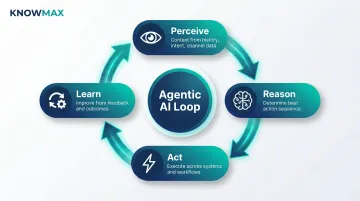
Agentic AI operates through a continuous cycle:
- Perceive – Understand context from customer history, intent signals, channel data
- Reason – Determine the best sequence of actions to achieve the goal
- Act – Execute across systems, tools, or workflows
- Learn – Improve from feedback and outcomes
Example: A customer contacts support about a billing dispute. Traditional automation asks for information; conversational AI answers questions. Agentic AI autonomously handles the entire resolution: verifying the account, identifying the error, processing the refund, and updating the CRM — then sends confirmation and schedules a follow-up, with no human handoffs required.
What "Autonomous" Actually Means
Autonomous doesn't mean unsupervised. Agentic AI makes independent decisions and executes actions within defined policies. Humans set the goals, guardrails, and escalation thresholds; the AI operates within those boundaries. It's delegated authority with clear limits — not a system running without oversight.
From Interaction to Journey
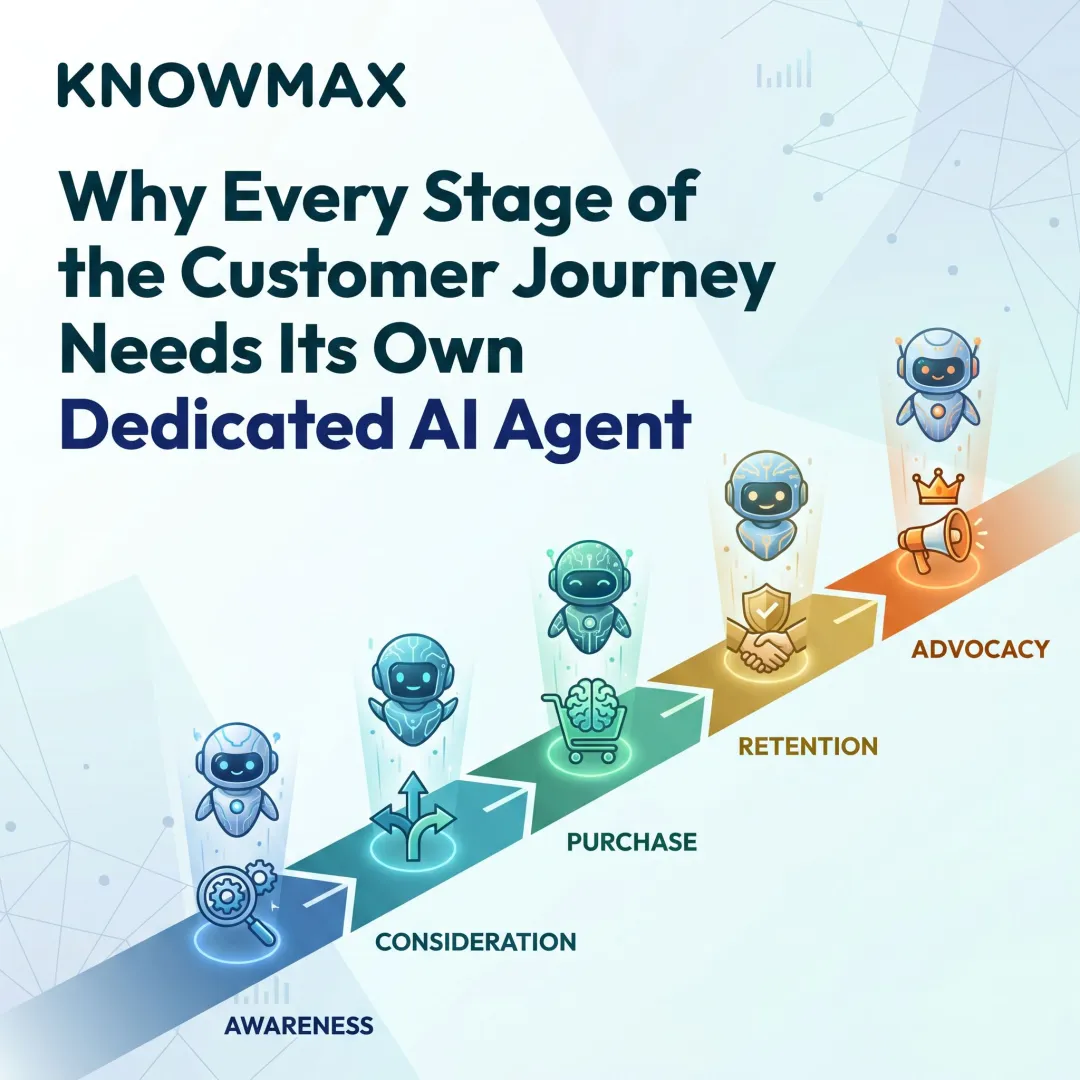
The fundamental shift: agentic AI moves from interaction-level automation (resolving a single query) to journey-level orchestration (managing the full arc of a customer experience across multiple touchpoints and systems).
Previous CX AI relied on rigid decision trees, menu-driven flows, and single-session memory. Agentic AI holds context across sessions, coordinates between systems, and adapts mid-conversation when circumstances change.
How Agentic AI Differs from Conversational AI and Traditional Chatbots
Understanding the distinction matters for deployment planning and budget allocation.
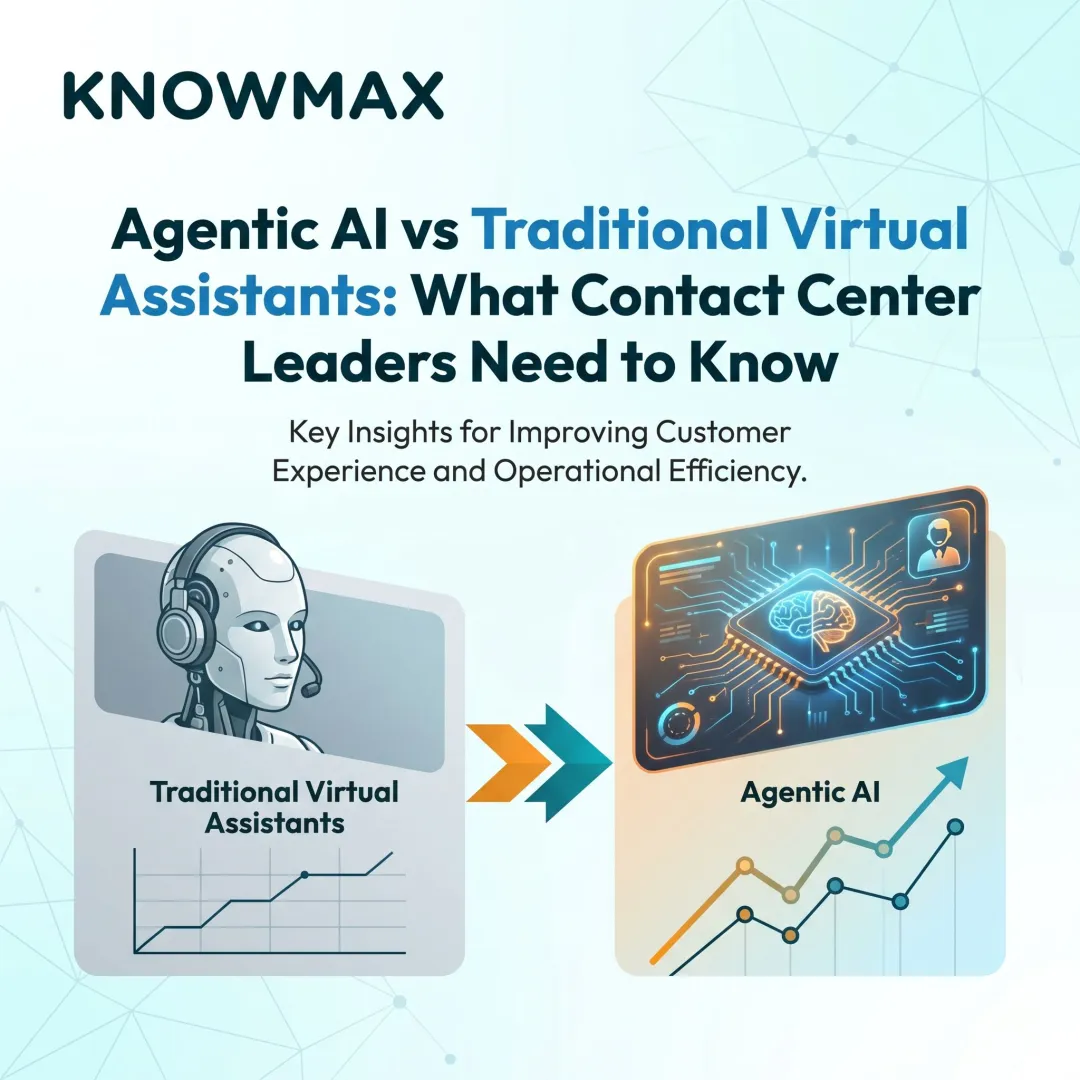
Traditional chatbots follow predefined flows with no reasoning capability. They answer FAQs through scripted paths.
Conversational AI adds natural language understanding, intent recognition, and dialogue management – but remains limited to single-interaction scope. It responds well. It just doesn't act.
Agentic AI manages the journey, not just the dialogue.
The Key Distinction
Gartner analyst Daniel O'Sullivan states: "Unlike traditional GenAI tools that simply assist users with information, agentic AI will proactively resolve service requests on behalf of customers."
Example comparison:
- Chatbot: Detects a delayed shipment when asked, provides tracking link
- Conversational AI: Explains the delay, offers options, answers follow-up questions
- Agentic AI: Proactively detects the delay before the customer reaches out, notifies them, reroutes the shipment via the logistics API, applies a service credit, and updates the CRM – all without human initiation
Conversational AI is still the interface customers talk to. What agentic AI adds is what happens next — the planning, the system calls, the resolution — without anyone having to ask twice.
Why Agentic AI Matters: Business Impact on CX
The business case for agentic AI in CX is measurable across four dimensions — and the numbers are hard to ignore.
Operational Efficiency
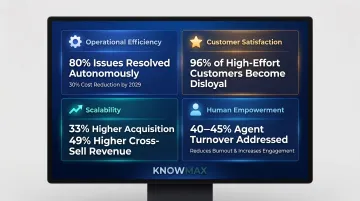
Gartner predicts that by 2029, agentic AI will autonomously resolve 80% of common customer service issues without human intervention, cutting operational costs by 30%.
Agentic AI handles complex, multi-step interactions autonomously, reducing the volume of issues requiring human agent intervention. In high-volume contact centres, a single percentage-point improvement in containment rates can represent millions in avoided staffing costs annually.
Customer Satisfaction Impact
Speed and effort drive satisfaction. Gartner research found that 96% of customers who have high-effort experiences become disloyal, compared to only 9% of those with low-effort experiences.
Agentic AI delivers:
- Faster resolutions through parallel system actions
- No channel-switching friction or repeated explanations
- Proactive engagement before problems escalate
Scalability Without Proportional Headcount Growth
Traditional CX scaling requires proportional headcount increases. Agentic AI allows organisations to expand service capacity – more channels, more interactions, extended hours – without linear cost growth.
Zendesk's 2025 CX Trends Report found that "CX Trendsetters" with mature AI-driven CX experience 33% higher customer acquisition rates, 22% higher retention, and 49% higher cross-sell revenue.
Human Agent Empowerment
Contact centre turnover hit 40-45% in 2025 — and agent burnout is a significant cost driver behind that figure. Agentic AI reduces the repetitive, low-complexity interactions that wear agents down, freeing them to focus on conversations that actually require empathy and judgment.
Competitive Differentiation
Gartner's survey of 321 customer service leaders found that 91% report pressure from executive leadership to implement AI in 2026 — described as "a sharp increase in urgency." That urgency has a practical implication: as AI-driven CX becomes standard across industries, organisations without it aren't just falling behind on efficiency. They're losing ground on the metric customers use to choose between brands.
Core Capabilities That Power Agentic AI in CX
Functional agentic AI for CX requires four foundational capabilities:
Goal-Oriented Reasoning
The ability to pursue an outcome, not just complete a task. The AI understands the desired end state and determines the sequence of actions needed to achieve it – even when the path isn't explicitly programmed.
Contextual Awareness
Memory across sessions, channels, and interaction history. Agentic AI recalls previous conversations, understands where the customer is in their journey, and adapts based on behavioural signals and sentiment.
Multi-Step Workflow Execution
McKinsey research finds that contact centre agents access 7 to 10 different systems to perform their jobs. Agentic AI coordinates actions across CRM, ticketing, billing, and fulfilment systems without manual handoffs. But autonomous action across those systems is only as reliable as the knowledge underneath it.
Structured Knowledge: The Operational Foundation
An agentic AI system is only as reliable as the knowledge it draws from. Poorly structured or inconsistent information leads to hallucinations, inaccurate responses, and broken workflows — regardless of how capable the underlying model is.
Knowledge management platforms built for CX, like Knowmax, address this directly:
- Guided decision trees that walk agents (and AI) through resolution workflows step by step
- Intent-aware search that surfaces contextually relevant knowledge, not just keyword matches
- Device-specific visual guides and troubleshooting paths (Knowmax maintains 18,000+ device guides for telecom and broadband)
- MaxAI authoring tools that auto-generate FAQs, convert SOPs into decision trees, and translate content across 15+ languages
Every autonomous action must be grounded in verified, up-to-date information. Gartner's CarMax case study illustrates how revamping knowledge management increased AI assistant accuracy by ensuring agents (human and AI) access consistent, structured knowledge.
Governance and Guardrails
Governance is where agentic AI stays trustworthy at scale. Role-based constraints, escalation triggers, audit trails, and human-in-the-loop protocols ensure the system operates safely and predictably — particularly in regulated industries like healthcare, banking, and insurance.
Agentic AI Use Cases Across the Customer Journey
The strongest case for agentic AI isn't speed — it's the ability to handle situations where multiple systems, decisions, and handoffs need to happen in sequence, without a human orchestrating each step.
Proactive Issue Resolution
Agentic AI detects service disruptions (flight cancellations, package delays, billing anomalies) before the customer contacts support, initiates outreach, and resolves or mitigates the issue autonomously.
Example: A telecom provider's agentic AI detects a network outage affecting a customer's area. It sends a proactive SMS notification, applies a service credit to the account, and updates the CRM with resolution notes – all before the customer dials support. CSAT improves because the customer never experienced friction.
Complex Multi-System Resolution
A customer wants to cancel a subscription, request a refund, and update their billing address – all in one interaction. Agentic AI coordinates CRM, billing, and fulfilment systems in real time.
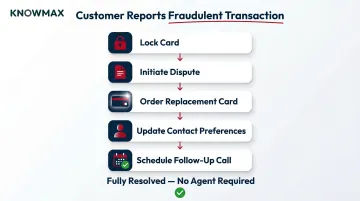
Banking example: A customer reports a fraudulent transaction. Agentic AI responds across fraud detection, card management, and CRM systems simultaneously — no agent required:
- Locks the compromised card immediately
- Initiates a formal dispute on the flagged transaction
- Orders a replacement card and confirms delivery address
- Updates contact preferences
- Schedules a follow-up call to confirm resolution
Onboarding and Lifecycle Orchestration
Agentic AI manages the full arc of customer relationship milestones – from onboarding new subscribers to triggering renewal conversations at optimal moments, personalising each step based on behavioural signals.
eCommerce example: A new customer completes their first purchase. Agentic AI handles the entire post-purchase sequence, tailored to the customer's product category and purchase history:
- Sends a personalised welcome message
- Enrolls them in the loyalty programme
- Schedules proactive delivery updates
- Triggers a post-delivery satisfaction survey
Cross-Channel Continuity
A customer begins a chat interaction, continues on mobile, and completes via voice. Agentic AI maintains full context and consistency throughout, eliminating the "please explain your issue again" problem that drives churn.
How to Deploy Agentic AI for CX: A Practical Framework
Successful deployment is built on structured planning. Technology selection comes later.
Step 1: Define Goals and Scope Before Touching Technology
Identify specific CX problems to solve:
- High AHT for billing queries?
- Poor FCR on returns?
- Agent overload during peak hours?
Prioritise use cases by automation potential, interaction volume, and business impact. Start with bounded, high-frequency scenarios rather than attempting full journey orchestration immediately.
Step 2: Audit and Structure Your Knowledge Foundation
Agentic AI cannot reason accurately on disorganised, outdated, or siloed information. Before deployment:
Conduct a knowledge audit:
- Identify gaps, inconsistencies, and missing resolution paths
- Remove duplicate or outdated content
- Categorise knowledge into logical taxonomies
Implement or strengthen knowledge management:
Platforms like Knowmax enable this through:
- AI-powered content structuring that transforms SOPs into decision trees
- Semantic search that understands intent, not just keywords
- Content governance workflows with version control and approval processes
- Analytics to detect knowledge gaps based on zero-result searches and agent feedback
Teams skip this step more than any other — and it's the leading cause of failed deployments. CX Today warns: "AI is an amplifier, not a healer. Deploy it on top of broken workflows and you won't get broken outcomes – you'll get broken outcomes at machine speed."
Step 3: Map Integrations and System Access
Document which backend systems the agentic AI will read from and write to:
- CRM (Salesforce, Zendesk)
- Ticketing systems (Freshdesk)
- Billing platforms
- Inventory and fulfilment systems
- IVR (Exotel)
- Messaging platforms (Freshchat)
For each system, define the data access model, API availability, and compliance constraints — particularly for GDPR, HIPAA, and SOC 2 environments. Knowmax provides ready APIs for real-time knowledge retrieval across these systems, which simplifies integration without custom development.
Step 4: Design Governance Guardrails and Escalation Protocols
Define the boundaries within which the AI operates autonomously:
- What actions require human approval?
- What triggers escalation to a live agent?
- What audit logging and performance monitoring will be in place?
Knowmax supports this through role-based access controls, maker-checker approval workflows, full audit trails, and version-controlled publishing — ensuring agents always access current, approved information.
Without this layer, autonomous AI action creates compliance risk, not efficiency gains.
Step 5: Pilot, Measure, and Expand
Launch on a defined use case with a representative customer segment. Measure against clear KPIs:
- CSAT (customer satisfaction score)
- FCR (first contact resolution) – industry average is 70%
- AHT (average handle time) – industry average is 4-6 minutes
- Escalation rate
- Containment rate
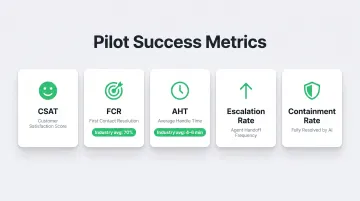
Set specific thresholds for each KPI before going live — for example, targeting FCR above 75% or AHT below 4 minutes. Gather agent and customer feedback, then refine the model before expanding to broader use cases.
Gartner predicts that over 40% of agentic AI projects will be cancelled by the end of 2027 due to unclear business value or inadequate risk controls. Disciplined piloting prevents this outcome.
Frequently Asked Questions
What is agentic AI in CX?
Agentic AI in CX refers to AI systems that reason, plan, and autonomously execute multi-step actions to resolve customer needs – going beyond answering questions to actively managing outcomes across entire customer journeys within governed boundaries.
What is the AI platform for CX?
An AI platform for CX is technology infrastructure combining conversational AI, automation, analytics, and agentic capabilities to deliver, orchestrate, and optimize customer interactions across channels – including self-service, agent assist, knowledge management, and workflow automation.
How is agentic AI different from conversational AI or traditional chatbots?
Chatbots follow scripts; conversational AI handles dialogue within single interactions. Agentic AI reasons across multi-step journeys, executes actions in backend systems, and pursues defined goals autonomously – enabling full resolution rather than just answering questions.
What are the most valuable use cases for agentic AI in customer service?
The highest-impact use cases include:
- Proactive issue resolution before customers escalate
- Complex multi-system query handling across integrated platforms
- Cross-channel continuity throughout a single customer journey
- Lifecycle orchestration for onboarding, renewal, and retention
Start with high-volume, low-complexity scenarios before expanding to emotionally sensitive interactions.
What does a business need in place before deploying agentic AI for CX?
A structured and accurate knowledge foundation, CRM and system integrations, defined governance guardrails and escalation protocols, and clarity on specific use cases and success metrics. Without these prerequisites, deployment will fail to scale.
How does knowledge management affect agentic AI performance?
Agentic AI is only as reliable as the knowledge it draws from. Poorly structured or outdated information leads to inaccurate responses and broken workflows, making a strong knowledge foundation critical to deployment success.